Kidi Club: Integrating a Playful Display Font into Professional Design Workflows
Selecting the right typography is rarely just an aesthetic choice; it is a functional decision that dictates user engagement, brand perception, and information hierarchy. For professionals ranging from graphic designers and educators to small business owners and marketers, the integration of display fonts like Kidi Club requires a strategic approach. While Kidi Club is fundamentally described as a fun and friendly display font, its utility extends far beyond simple decoration. It serves as a specific tool within a broader creative workflow, capable of setting tone, capturing attention, and guiding the viewer’s eye in projects targeting children, families, or playful branding.
This article explores how to effectively integrate Kidi Club into your design processes. We will examine its technical characteristics, ideal use cases, compatibility with other design elements, and best practices for implementation across various digital and print mediums. The goal is to move beyond vague suggestions of "using cute fonts" and provide a structured framework for leveraging this typeface to achieve clear, professional, and engaging outcomes.
Understanding the Typography Profile of Kidi Club
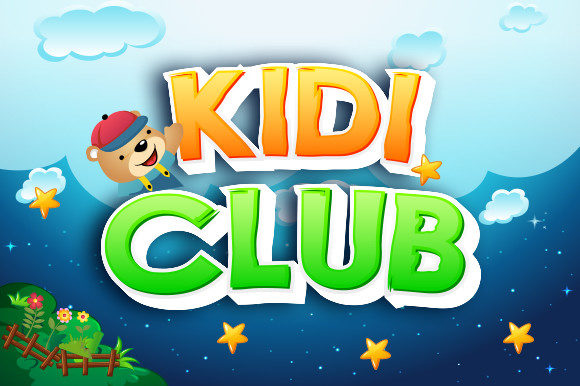
Before integrating any asset into a production pipeline, understanding its structural properties is essential. Kidi Club is characterized by its rounded edges, bold strokes, and informal structure. These features contribute to its "fun and friendly" reputation, making it instantly recognizable and approachable. Unlike serif or sans-serif body fonts designed for readability over long passages, Kidi Club is a display font. This classification dictates where it fits in your workflow: it is intended for headlines, titles, logos, and short phrases, not for paragraphs of text.
The visual weight of Kidi Club allows it to command attention without requiring excessive sizing. This efficiency is valuable in marketing materials where space is limited but impact must be high. However, the very qualities that make it appealing—its irregularity and playfulness—also introduce constraints. When planning a project, you must consider legibility at various scales. A font that looks charming on a large poster may become illegible when scaled down for mobile app icons or social media thumbnails. Testing Kidi Club across different resolutions and contexts is a critical step in the quality control phase of any design project.
Psychological Impact and Brand Alignment
In workflow planning, particularly for brands and educational content, psychological alignment is key. Kidi Club evokes feelings of safety, creativity, and joy. If your target audience includes parents selecting resources for their children, or if you are creating content for early childhood education, this font acts as a non-verbal cue that aligns with those values. Conversely, using Kidi Club in a corporate financial report or a legal document would create cognitive dissonance, undermining the authority of the message.
Therefore, the first stage of integration is a decision-making process. Ask yourself: Does the project require a tone of approachability and whimsy? If yes, Kidi Club is a strong candidate. If the project demands seriousness, precision, or minimalism, this font should be excluded from the palette. This preliminary filter saves time later by preventing the need to rework designs that have the wrong tonal foundation.
Strategic Use Cases in Creative Workflows
Kidi Club shines in specific niches where visual hierarchy and emotional connection are paramount. Below are practical scenarios where this font integrates seamlessly into established workflows.
Educational Materials and Children’s Publishing
For educators, tutors, and self-publishers creating worksheets, book covers, or classroom posters, Kidi Club offers a distinct advantage. In these workflows, the font helps break the monotony of standard instructional text. It can be used to highlight key terms, title chapters, or create engaging headers for learning activities. Because it is easy to read for young learners who are still developing literacy skills, it supports the pedagogical goal of accessibility. When designing digital learning modules, ensure that the contrast between Kidi Club and the background color is sufficient to maintain readability for all users, including those with visual impairments.
Brand Identity for Family-Oriented Businesses
Entrepreneurs launching businesses in the toy, childcare, party planning, or family travel sectors often struggle to balance professionalism with approachability. Kidi Club provides a solution for the "friendly" half of that equation. It can be used in logo design, packaging labels, and promotional banners. To maintain a professional appearance, pair Kidi Club with a more neutral, stable font for body copy. This combination creates a balanced typographic hierarchy: Kidi Club captures attention and sets the mood, while the secondary font delivers detailed information clearly. This strategy ensures that the brand feels welcoming without sacrificing credibility.
Social Media and Digital Marketing
In the fast-paced environment of social media marketing, static images and short videos compete for seconds of attention. Kidi Club’s bold and colorful nature makes it ideal for quote graphics, event announcements, and promotional posts. Its unique shape helps content stand out in crowded feeds. However, efficiency in digital workflows requires optimization. Large font files can slow down page load times. When using Kidi Club on websites or in email campaigns, convert the text to outlines or use web-safe alternatives if available, ensuring that the visual intent is preserved without compromising site performance.
Technical Integration and Compatibility
Implementing Kidi Club smoothly requires attention to technical details. Whether you are working in Adobe Illustrator, Canva, Figma, or Microsoft Word, the following considerations will help maintain consistency and quality.
- File Formats: Ensure you have access to the correct file formats for your needs. For vector-based work such as logos and large-scale printing, SVG or EPS formats are preferable as they allow scaling without loss of quality. For digital screens and general documents, TTF or OTF files are standard. Always verify the licensing agreement to ensure you have the rights to use the font for commercial purposes.
- Kerning and Tracking: Display fonts often have unique spacing requirements. Kidi Club’s rounded shapes may appear too loose or too tight depending on the letter combinations. Take the time to adjust kerning manually for important headings. Poor spacing can undermine the polished look of even the most creative design. Use tracking (letter-spacing) sparingly; adding space to a playful font can sometimes make it look disjointed rather than elegant.
- Color Pairing: The effectiveness of Kidi Club is heavily dependent on color. Since the font itself is visually busy, pair it with solid, contrasting backgrounds. Avoid placing it over complex images or patterns unless there is a strong overlay or shadow effect to separate the text. Bright, primary colors complement the font’s energetic vibe, while pastel tones can soften its impact for more subtle applications.
Workflow Optimization Tips
To maximize efficiency when using Kidi Club in your projects, consider adopting these organizational strategies.
- Create Style Guides: If you use Kidi Club regularly, define strict guidelines for its application. Specify which fonts pair well with it, what sizes are appropriate for different contexts, and which colors to avoid. This reduces decision fatigue and ensures consistency across multiple projects or team members.
- Test Accessibility: As part of your final review process, check your designs for accessibility compliance. Use tools to simulate color blindness and test contrast ratios. Even playful designs must be inclusive. If Kidi Club fails the contrast test against your chosen background, adjust the background color or add a text shadow to improve legibility.
- Backup and Version Control: Fonts can be lost or corrupted if not managed properly. Store your Kidi Club files in a centralized, backed-up location. If you are collaborating with others, share the font file along with the design assets to prevent substitution issues. Unexpected font replacements can ruin the layout and timing of a launch.
Long-Term Value and Adaptability
Investing in a versatile display font like Kidi Club adds value to your creative toolkit over time. Its adaptability allows it to be reused across diverse projects, from physical merchandise to digital advertisements. By mastering its nuances—how it interacts with space, color, and other typefaces—you develop a specialized skill set in tonal typography. This expertise enhances your ability to communicate brand personality effectively, a skill that is increasingly valuable in a market saturated with generic design templates.
Ultimately, Kidi Club is more than just a "fun font." It is a strategic asset that, when integrated thoughtfully into your workflow, can elevate the emotional resonance and visual clarity of your work. By approaching its usage with the same rigor you apply to other design decisions—considering context, compatibility, and user experience—you ensure that every project benefits from its unique charm and impact.