Hello Ciao: The Sweet Display Font for Playful Branding
In a digital landscape saturated with sterile minimalism and rigid geometric sans-serifs, there is a distinct hunger for warmth. Audiences are scrolling past polished corporate aesthetics, looking for something that feels human, approachable, and genuinely inviting. This is where Hello Ciao steps in. It is not just another typeface; it is a personality-driven display font designed to inject immediate charm into any visual project.
As a creative professional, you know that typography does more than convey text—it sets the emotional tone before a single word is read. Hello Ciao captures that sweet, friendly energy perfectly. With its rounded edges, playful curves, and unapologetically cheerful structure, this font bridges the gap between whimsy and professionalism. Whether you are designing for a children’s brand, a lifestyle blog, or a boutique packaging line, understanding how to leverage this specific aesthetic can elevate your design assets from standard to standout.
Understanding the Visual Personality of Hello Ciao
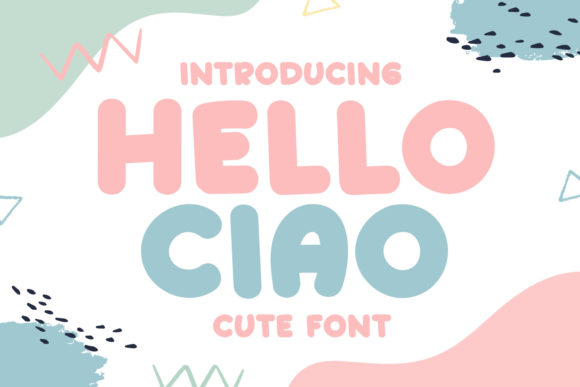
To use Hello Ciao effectively, you first need to understand what makes it tick visually. As a display font, it is engineered for impact at larger sizes rather than body text. Its character set features soft, bubbly forms that mimic the natural flow of a friendly greeting. Unlike harsh, angular modern typography, Hello Ciao avoids sharp corners, opting instead for a gentle, organic rhythm that feels handwritten without being illegible.
The font’s appeal lies in its balance. It is cute and sweet, yes, but it retains enough structural integrity to remain legible and clean. This is crucial for designers who want to avoid the "childish" trap while still targeting younger demographics or seeking a lighthearted vibe. When paired with bright colors—think vibrant yellows, soft pinks, energetic teals, or sunny oranges—Hello Ciao becomes a powerful tool for capturing attention. The contrast between the bold, colorful background and the crisp, friendly letterforms creates an instant visual hook.
This typeface falls comfortably into the category of a creative font that leans toward a modern, hand-drawn aesthetic. However, unlike some script fonts that can be difficult to read quickly, Hello Ciao offers high clarity. Each letter is distinct, ensuring that your message is understood instantly. This readability is a significant advantage for marketers and content creators who need to communicate quickly on social media platforms where attention spans are fleeting.
Ideal Applications Across Creative Industries
The versatility of Hello Ciao extends far beyond simple party invitations. While its name suggests a casual greeting, its application range is surprisingly broad for brands aiming to build trust through friendliness. Here is where this font truly shines:
- Children’s Brands and Educational Materials: For toy companies, daycare centers, or educational apps, Hello Ciao provides an age-appropriate voice. It signals safety and fun, making it ideal for logo design in the pediatric or early-learning sectors.
- Packaging Design: In the crowded world of consumer goods, shelf presence matters. A box of artisanal cookies, a line of organic baby clothes, or a specialty tea brand can benefit from the approachable nature of Hello Ciao. It suggests that the product inside is made with care and sweetness.
- Social Media Graphics: Content creators and influencers use this font to create eye-catching quotes, event announcements, and promotional banners. Its boldness ensures it remains readable even when scaled down for mobile screens.
- Editorial Design: Magazines and blogs focusing on lifestyle, parenting, or wellness often use Hello Ciao for pull quotes or section headers. It breaks up dense text and adds a layer of visual interest that keeps readers engaged.
- Small Business Brand Identity: For entrepreneurs launching cafes, bakeries, or craft shops, establishing a warm brand identity is key. Hello Ciao helps small businesses compete with larger corporations by offering a unique, personal touch that big-box stores cannot replicate.
It is important to note that while Hello Ciao is a commercial font suitable for these uses, its primary strength is as a headline or title element. It should never be used for long-form paragraphs. Its role is to announce, greet, and highlight.
Strategic Typography: Pairing and Hierarchy
One of the most common mistakes designers make with display fonts like Hello Ciao is using them in isolation without considering context. To maximize the effectiveness of this premium font, you must master the art of font pairing. Because Hello Ciao carries such a strong visual weight and personality, it needs a neutral partner to ground it.
The best strategy is to pair Hello Ciao with a clean, understated sans serif font or a classic serif font for body copy. For example, using a minimalist sans-serif like Helvetica Now or a readable Georgia for paragraphs allows the eyes to rest after engaging with the playful headline. This contrast creates a clear visual hierarchy, guiding the viewer’s eye from the catchy title down to the detailed information. Without this balance, a design can feel chaotic or overwhelming.
Consider the impact on brand perception. When Hello Ciao is combined with a serious, traditional serif, it creates an interesting juxtaposition—modern yet timeless, playful yet sophisticated. This duality can attract a wider audience, appealing to both those who seek fun and those who value reliability. For web design, this combination enhances user experience by making headings scannable and memorable while keeping the reading experience smooth and professional.
Practical Considerations for Implementation
Before downloading and implementing Hello Ciao into your next project, there are several practical factors to evaluate. First, review the included styles. Does the family offer multiple weights? Are there italic variants? Having access to different weights allows for greater flexibility in creating emphasis and depth within a layout. If the font includes ligatures or special characters, test them thoroughly to ensure they render correctly across different browsers and devices.
Readability is paramount. Always test Hello Ciao at various sizes and resolutions. On low-resolution screens, the rounded edges might blur if not rendered properly. Ensure that the contrast between the font color and the background is sufficient. Since Hello Ciao is often associated with bright colors, remember that light pastel backgrounds may require a darker font shade to maintain legibility.
Licensing is another critical step. Verify the commercial usage rights. Some design assets come with restrictions on the number of impressions or specific use cases. For small business owners and freelancers, securing the correct license protects you from legal issues and supports the type designer. Treat your typography choices as part of your overall investment in brand quality.
Finally, don’t be afraid to experiment. Typography is a dynamic element of design. Try combining Hello Ciao with textured backgrounds, illustrations, or photography. See how it interacts with other graphic elements. The goal is to create a cohesive brand identity where the font feels like a natural extension of the brand’s voice, not just a decorative add-on. By thoughtfully integrating Hello Ciao into your workflow, you can create designs that are not only visually appealing but also emotionally resonant with your target audience.