Baby Zone Font Evaluation
In the realm of digital typography, selecting the right typeface is often a matter of balancing aesthetic appeal with functional utility. For designers working in the children’s entertainment, educational, or playful branding sectors, the visual tone must be immediate and accessible. Baby Zone emerges as a specific solution within this niche, positioning itself as a fun, simple, and playful display font. This evaluation explores the characteristics, technical specifications, and practical applications of Baby Zone to help creators determine if it aligns with their project requirements.
Understanding the Typography
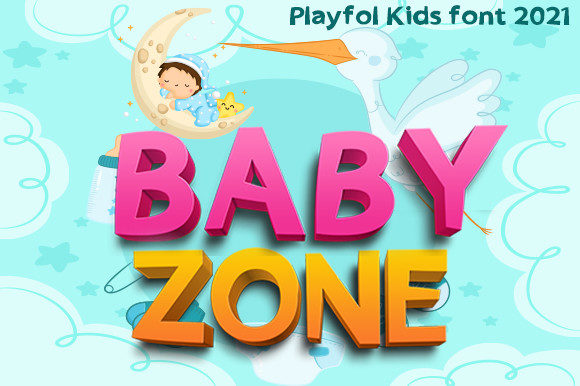
Baby Zone is categorized primarily as a display font. Unlike body text fonts that prioritize readability over long durations, display fonts are designed to capture attention at larger sizes. The design philosophy behind Baby Zone centers on simplicity and playfulness. Its letterforms are rounded and approachable, evoking a sense of whimsy and innocence that resonates well with younger audiences or brands aiming for a lighthearted identity.
The font’s structure avoids sharp angles or complex serifs, opting instead for smooth curves that suggest movement and joy. This makes it particularly suitable for contexts where the primary goal is to convey warmth and friendliness. Whether used for cartoon-related designs, packaging for children’s products, or promotional materials for family-oriented events, Baby Zone provides a consistent visual language that is easy to digest visually.
Technical Specifications and Accessibility
One of the most significant advantages of Baby Zone lies in its encoding method. The font is PUA (Private Use Area) encoded. To understand why this matters, it is helpful to look at standard font limitations. Traditional fonts often have a limited set of characters included in their basic Unicode mapping. If a designer wants to use special swashes, alternate glyphs, or decorative elements that are not part of the standard character set, they may find themselves restricted.
PUA encoding allows developers and designers to access all available glyphs, swashes, and special characters with ease. Instead of relying on external plugins or complex workarounds, users can access these unique features directly through the font file. This means that a designer can incorporate intricate decorative elements into their text without needing to switch to a different tool or format. For projects that require high levels of customization and visual flair, this technical feature reduces friction in the workflow.
- Comprehensive Glyph Set: Access to swashes and alternates enhances creative flexibility.
- Easy Integration: No need for third-party tools to access special characters.
- Consistency: All decorative elements remain within the same font family, ensuring typographic harmony.
Practical Applications and Use Cases
Determining where Baby Zone fits best requires looking at specific industry verticals and design goals. Because the font is inherently playful, it is less suited for formal corporate communications or legal documents. However, it excels in environments where engagement and emotional connection are paramount.
Children’s Media and Gaming
In the context of children’s games, Baby Zone serves as an excellent choice for titles, buttons, and instructional text. The rounded nature of the letters mimics the softness associated with toys and nursery items, creating a subconscious sense of safety and comfort for young users. In game UI design, clarity is key, and the simple structure of Baby Zone ensures that text remains legible even when scaled down or placed against busy backgrounds.
Educational Materials
For early learning resources, such as alphabet charts, flashcards, or interactive apps for toddlers, the font’s simplicity aids in recognition. Young learners are still developing their ability to distinguish between letter shapes. A font with clear, distinct forms helps reduce cognitive load, allowing children to focus on learning rather than deciphering complex typography.
Branding for Family-Oriented Products
Brands targeting parents and families often seek to appear trustworthy yet approachable. Baby Zone can bridge this gap by offering a friendly aesthetic without appearing unprofessional. It is effective for bakery logos, toy store signage, and event invitations where a "lovely touch" is desired.
Tradeoffs and Considerations
While Baby Zone offers distinct advantages, it is important to acknowledge its limitations. As a display font, it is not intended for extended paragraphs of text. Using Baby Zone for body copy can lead to reader fatigue due to its heavy visual weight and decorative potential. Designers should reserve it for headlines, titles, and short phrases.
Additionally, the subjective nature of "playful" design means that the font may not resonate with all audiences. In markets where sophistication and minimalism are valued, Baby Zone might be perceived as too casual or childish. It is crucial to align the font choice with the overall brand voice. If the brand identity is serious, authoritative, or luxury-focused, alternatives such as clean sans-serifs or elegant serifs would be more appropriate.
Alternatives and Comparison
When evaluating Baby Zone, it is useful to consider what it is not. It is not a versatile system font. If a project requires a single font family to handle both headings and body text across multiple platforms, Baby Zone will fall short. In such cases, designers might look toward humanist sans-serif fonts that offer a balance of warmth and neutrality.
Furthermore, while PUA encoding is convenient, it can sometimes pose challenges in web development. Web browsers rely on standard Unicode mappings for optimal rendering and accessibility. Using PUA-encoded fonts may require additional CSS adjustments or fallback strategies to ensure that special characters render correctly across all devices. Designers should test thoroughly before deploying the font in a live environment.
Decision-Making Insights
To determine if Baby Zone is the right choice, consider the following questions:
- What is the primary audience? If the audience includes children or individuals seeking a lighthearted experience, Baby Zone is a strong candidate.
- What is the volume of text? If the design relies on large, impactful headlines rather than long-form reading, the font’s strengths will shine.
- Do you need special characters? If your design requires swashes and alternates, the PUA encoding of Baby Zone simplifies the process significantly.
- Is consistency across media required? Ensure that the font is available for print, web, and app development to maintain brand coherence.
In conclusion, Baby Zone is a specialized tool designed for specific creative needs. It offers a charming, simple aesthetic backed by robust technical features like PUA encoding. By understanding its strengths in display contexts and its limitations in body text, designers can make informed decisions that enhance their projects. When used appropriately, it adds a delightful and memorable quality to any creation that requires a lovely touch.