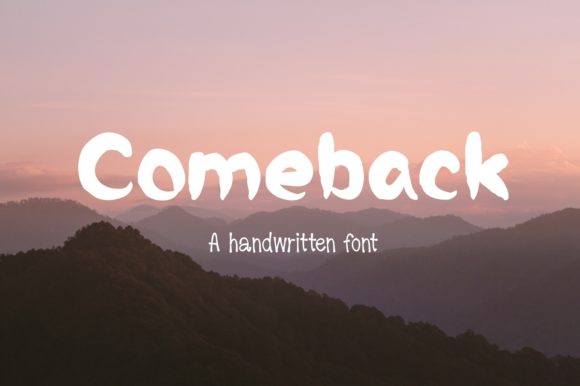
Evaluating Comeback: A Brushed Display Font for Organic Design Projects
In the realm of graphic design, typography serves as the voice of visual communication. It sets the tone, establishes hierarchy, and evokes emotion before a single word is fully read. Among the vast array of typefaces available to designers, Comeback has emerged as a distinctive choice for projects requiring an organic, hand-crafted aesthetic. Classified as a cute and brushed display font, it offers a unique blend of approachability and artistic flair that stands out in both digital and print media.
For professionals aged 20 to 50 who are constantly evaluating design resources, understanding the specific niche of a font like Comeback is essential. It is not merely a decorative element; it is a strategic tool that can elevate branding, crafting, and presentation materials. This analysis explores the characteristics of Comeback, compares its utility against other typographic styles, and provides practical guidance on when to integrate it into your workflow.
The Aesthetic Profile of Comeback
To understand why Comeback is selected for specific projects, one must first analyze its visual architecture. Unlike geometric sans-serifs or rigid serif fonts, Comeback draws inspiration from natural, manual brushstrokes. The term "brushed" implies a texture and irregularity that mimics the pressure and movement of a real paintbrush or marker. This results in a typeface that feels alive and dynamic rather than static and manufactured.
The "cute" descriptor often associated with this font refers to its rounded terminals, soft edges, and inviting proportions. These features reduce visual aggression, making the text feel friendly and accessible. However, this does not mean it lacks sophistication. The organic touch adds a layer of uniqueness that prevents designs from looking generic. In a market saturated with clean, minimalist corporate fonts, Comeback provides a necessary contrast—a human element that connects with viewers on an emotional level.
- Organic Texture: The irregular line weights simulate hand-drawn artistry.
- Approachable Tone: Rounded forms create a sense of warmth and friendliness.
- Display Focus: Its primary strength lies in headlines and short phrases rather than body text.
Comparative Analysis: Hand-Drawn vs. Digital Precision
When selecting a typeface, designers often face a fundamental decision: prioritize digital precision or embrace organic imperfection. Fonts like Helvetica or Arial offer unmatched clarity and neutrality, making them ideal for dense information or technical documentation. In contrast, Comeback belongs to the category of display fonts designed to capture attention through personality.
The tradeoff here is legibility versus character. While Comeback excels at creating a mood, it is less suitable for long-form reading. Comparing it to standard sans-serifs reveals that Comeback sacrifices uniformity for charm. This makes it a poor candidate for user interface (UI) elements where consistency is key, but an excellent candidate for marketing materials where differentiation is paramount.
Furthermore, consider the comparison between vector-based clean fonts and bitmap or textured fonts. Some alternative options rely on heavy textures or drop shadows to achieve a "hand-made" look. Comeback achieves this effect natively through its glyph structure. This means it remains crisp at various sizes without relying on external effects, offering a cleaner implementation in digital environments compared to more complex, texture-heavy alternatives.
Practical Applications and Use Cases
The versatility of Comeback stems from its ability to adapt to various creative disciplines. Its strengths are most evident in contexts where brand identity relies on creativity, personal touch, or artisanal quality.
Crafting and Small Business Branding
For entrepreneurs in the handmade goods sector, such as candle makers, potters, or boutique clothing brands, Comeback is an ideal match. The font’s brushed aesthetic aligns perfectly with products that emphasize craftsmanship. When used on packaging labels, business cards, or social media banners, it reinforces the narrative of a brand that values human effort over mass production.
Digital Design and Social Media
In the fast-paced world of social media, content must stop the scroll. Comeback’s unique shape and organic flow make it highly effective for quote graphics, event announcements, and promotional posts. Its "cute" factor resonates well with lifestyle, wellness, and parenting niches, where the audience seeks connection and authenticity. However, designers should pair it with simple, neutral backgrounds to ensure the text remains the focal point.
Presentations and Greeting Cards
Presentation decks often suffer from visual fatigue due to repetitive slide layouts. Introducing Comeback for slide titles or section headers can break the monotony and inject energy into the narrative. Similarly, for greeting card design, the font’s inherent warmth translates directly into the emotional message of the card. Whether for birthdays, weddings, or thank-you notes, Comeback helps convey sincerity and care.
Decision Factors: When to Choose Comeback
Selecting the right font requires careful consideration of the project’s goals, audience, and medium. Comeback is not a universal solution, but rather a specialized tool. Understanding its limitations is just as important as recognizing its strengths.
Best-Fit Scenarios
- Headline-Heavy Designs: If the project relies on large, impactful text to convey the main message, Comeback shines.
- Brands Seeking Personality: For businesses that want to appear approachable, creative, or artisanal, this font supports their brand voice.
- Limited Text Volume: Since it is a display font, it is best used for short bursts of text where readability is maintained.
When to Look Elsewhere
There are clear situations where Comeback may not be the appropriate choice. If the goal is to present complex data, legal terms, or instructional manuals, a highly legible sans-serif or serif font is necessary. The organic nature of Comeback can introduce cognitive load, forcing the reader to work harder to decipher the letters. Additionally, in formal corporate communications or academic publishing, the "cute" aesthetic might undermine the perceived authority and seriousness of the content.
Technical Considerations and Pairing
From a technical standpoint, integrating Comeback into a design system requires thoughtful pairing. Because of its strong visual presence, it works best when balanced with simpler typefaces. A common strategy is to use Comeback for headings and titles, while pairing it with a clean, neutral sans-serif for body text. This combination leverages the emotional appeal of Comeback while maintaining the functional clarity needed for detailed information.
Designers should also pay attention to spacing. Due to the irregular shapes of the letters, kerning (the space between individual characters) may require adjustment to prevent awkward gaps or collisions. Testing the font at different sizes is crucial, as some brush-style fonts can lose their detail or become muddy when scaled down too small. Ensuring high resolution in export settings will preserve the brushed texture, particularly for print applications.
Conclusion: Strategic Typography Selection
Comeback represents a valuable addition to a designer’s toolkit, specifically for projects that demand an organic, friendly, and distinctive voice. Its brushed display style offers a refreshing alternative to the sterile perfection of many modern digital fonts. By understanding its aesthetic profile, comparing it against more conventional options, and recognizing its ideal use cases, designers can make informed decisions that enhance their work.
Whether you are crafting a personal brand identity, designing engaging social media content, or creating heartfelt greeting cards, Comeback provides the visual language to communicate effectively. However, success lies in restraint and context. Used strategically, it transforms ordinary designs into outstanding creations that resonate with audiences on a deeper, more human level.